
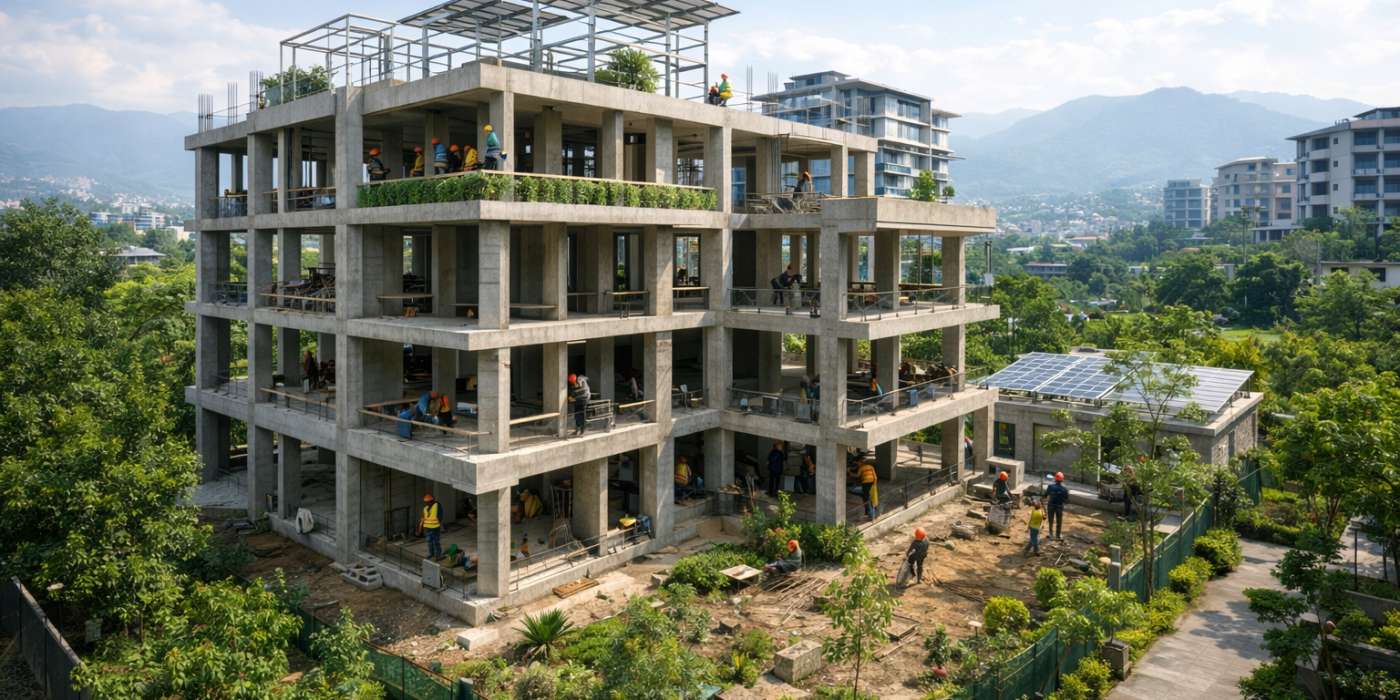
- Sustainable Building Practices in Nepal: Shaping the Future of Construction
- Learn how sustainable building practices in Nepal are shaping the future of construction through energy efficiency, local materials, and eco-friendly design.
- As environmental awareness continues to grow, sustainable building has become a necessity rather than a trend.
- Sustainable construction focuses on minimizing environmental impact while improving building efficiency, durability, and occupant comfort.
- Environmental Impact of Traditional Construction Methods
- Conventional construction methods often rely on high energy consumption, excessive material use, and inefficient waste management.
- Traditional practices can result in significant environmental damage, including increased carbon emissions, resource depletion, and unmanaged construction waste.
- Sustainable building addresses these issues by emphasizing efficient planning, reduced material waste, and environmentally responsible construction methods that lower the overall ecological footprint of a project.
Sustainable Building Practices in Nepal: Shaping the Future of Construction
Learn how sustainable building practices in Nepal are shaping the future of construction through energy efficiency, local materials, and eco-friendly design.
Introduction
As environmental awareness continues to grow, sustainable building has become a necessity rather than a trend. In Nepal, where rapid urbanization intersects with fragile natural ecosystems, construction practices play a critical role in shaping environmental and social outcomes.
Sustainable construction focuses on minimizing environmental impact while improving building efficiency, durability, and occupant comfort. For homeowners, businesses, and property owners in Nepal, eco-friendly construction is increasingly a practical and responsible long-term investment.
Environmental Impact of Traditional Construction Methods
Conventional construction methods often rely on high energy consumption, excessive material use, and inefficient waste management. In Nepal, these challenges are amplified due to limited recycling infrastructure and increasing demand for construction materials.
Traditional practices can result in significant environmental damage, including increased carbon emissions, resource depletion, and unmanaged construction waste.
Sustainable building addresses these issues by emphasizing efficient planning, reduced material waste, and environmentally responsible construction methods that lower the overall ecological footprint of a project.
Energy-Efficient Technologies in Modern Construction
Energy efficiency is one of the most impactful components of sustainable construction. Buildings designed with energy-saving features consume less power, reduce operating costs, and provide better indoor comfort.
In Nepal, practical energy-efficient technologies include solar-ready rooftops, improved insulation, natural ventilation strategies, energy-efficient lighting, and water-saving systems.
National energy and sustainability policy direction is guided by institutions such as the
Ministry of Urban Development, Government of Nepal, which influences building standards and urban planning.
Use of Local and Recyclable Materials
One of the most effective sustainable building strategies in Nepal is the use of locally sourced and recyclable materials. This approach reduces transportation emissions, supports local industries, and improves supply reliability.
Local materials such as stone, brick, and regionally available aggregates help lower environmental impact while maintaining construction quality. Recyclable and low-impact materials further reduce waste and promote responsible resource use.
When combined with quality RCC construction, these materials contribute to long-lasting, environmentally responsible structures.
Promoting Green Spaces and Biodiversity
Sustainable building extends beyond the structure itself. Thoughtful projects consider how construction interacts with the surrounding environment.
Incorporating green spaces such as courtyards, landscaped setbacks, and rooftop gardens helps improve air quality, manage rainwater naturally, and support local biodiversity.
Even small green design elements can significantly enhance livability in dense urban areas across Nepal.
Community Engagement in Sustainable Practices
Sustainable construction is most effective when it includes the surrounding community. Engaging local labor, respecting neighborhood safety, and managing waste responsibly during construction fosters environmental stewardship.
Community involvement strengthens long-term project success and creates shared responsibility for maintaining eco-friendly outcomes.
Government Initiatives and Policy Direction in Nepal
The Government of Nepal has been gradually strengthening regulations related to building safety, environmental impact, and urban development.
Guidance from bodies such as the
Nepal Rastra Bank also influences sustainable construction indirectly through housing finance policies that encourage planned, compliant development.
Staying informed about evolving regulations helps builders and property owners align projects with national sustainability goals and future compliance requirements.
Why Sustainable Building Matters for Nepal’s Future
Sustainable construction is not only about protecting the environment. It also improves long-term building performance, reduces operating costs, enhances occupant health, and increases property value.
As climate challenges and urban density increase, sustainable building practices provide a balanced approach to growth that respects Nepal’s natural and cultural landscape.
Why Choose RNR Build Experts?
- Residential and commercial construction expertise
- RCC and earthquake-resistant structural design
- Thoughtful material selection and efficient planning
- Transparent budgeting and realistic timelines
- Strong site supervision and quality control
Explore completed projects and construction experience in our
construction portfolio, or read our detailed guide on
building a house in Nepal while living abroad to understand our structured approach.
Local Construction Insights
Nepal’s construction environment is shaped by climate, seasonal labor availability, and municipal approval processes. Monsoon conditions affect excavation and RCC work, while dry months are better suited for structural and finishing stages.
Early permit planning and experienced site supervision are essential for maintaining sustainability and construction quality.
Planning a residential or commercial construction project in Nepal and want to build responsibly for the future?
Review our recent construction projects or start with our practical guide on building a house in Nepal while living abroad to plan your next steps with confidence.
Frequently Asked Questions
What are sustainable building practices in Nepal?
Sustainable building practices in Nepal focus on energy efficiency, use of local materials, waste reduction, environmentally responsible design, and long-term building performance.
How much does it cost to build a sustainable house in Nepal?
The cost depends on design, materials, and technology used, but proper planning and professional construction management help control long-term expenses.
Location Clarity: RNR Build Experts is a Nepal-based construction company delivering reliable residential and commercial projects that follow local codes, climate conditions, and safety standards.
Service Areas: Kathmandu Valley, Lalitpur, Bhaktapur, Pokhara, and surrounding regions across Nepal.
