
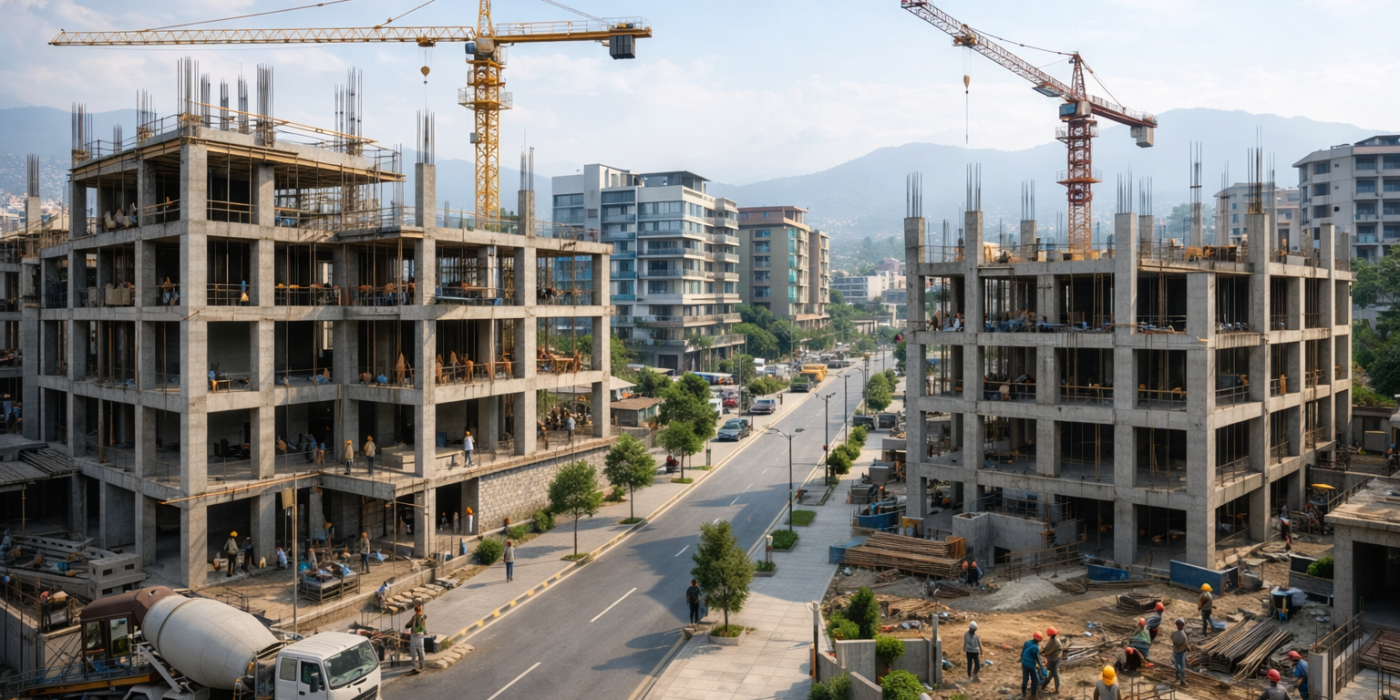
- Emerging Trends in Nepal’s Real Estate Market in 2026: What Builders and Buyers Should Know
- Discover key real estate trends shaping Nepal in 2026, from home loan policies and construction costs to sustainability, timelines, and smarter building decisions.
- Introduction: Why 2026 Is a Turning Point for Real Estate in Nepal
- The real estate market in Nepal is entering a more thoughtful and structured phase in 2026.
- For homeowners, businesses, and property owners, understanding these trends is essential before starting a new project.
- Trend 1: Financing and Loan Policy Impact on Home Construction
- Housing finance continues to play a major role in shaping construction decisions.
- Buyers now expect construction planning to align with loan disbursement schedules, cost approvals, and bank inspections.
Emerging Trends in Nepal’s Real Estate Market in 2026: What Builders and Buyers Should Know
Discover key real estate trends shaping Nepal in 2026, from home loan policies and construction costs to sustainability, timelines, and smarter building decisions.
Introduction: Why 2026 Is a Turning Point for Real Estate in Nepal
The real estate market in Nepal is entering a more thoughtful and structured phase in 2026. After years of rapid growth, correction, and adjustment, buyers and builders are becoming more informed, cautious, and quality-focused.
For homeowners, businesses, and property owners, understanding these trends is essential before starting a new project. In 2026, success in real estate depends less on speed and more on planning, safety, financing, and execution quality.
Trend 1: Financing and Loan Policy Impact on Home Construction
Housing finance continues to play a major role in shaping construction decisions. Improved access to home construction and purchase loans has encouraged many stalled or delayed projects to move forward.
Buyers now expect construction planning to align with loan disbursement schedules, cost approvals, and bank inspections. This has increased demand for structured construction management and realistic budgeting.
Official housing finance and monetary policy guidelines are published by the
Nepal Rastra Bank, which significantly influence construction timelines and buyer confidence.
Trend 2: Location Shifts and Smarter Land Use in Urban Areas
Rising land prices in core urban areas such as Kathmandu Valley have shifted focus toward smarter land use rather than larger footprints. Many property owners now prefer vertical residential construction and mixed-use buildings.
This trend supports compact layouts, rental floors, and long-term flexibility, making professional design and structural planning more important than ever.
Trend 3: Construction Cost Behavior and Budget Planning
Construction costs in Nepal remain sensitive to material pricing, labor availability, and finishing choices. While cement and steel prices are relatively stable, total project costs often rise due to late design changes and underestimated finishing expenses.
In 2026, buyers are increasingly aware that cost control starts with early planning, accurate BOQs, and contractor coordination.
Trend 4: Demand for Earthquake-Resistant and Quality RCC Structures
Safety and durability are now central to real estate decisions. Homeowners and commercial property owners are asking more questions about RCC quality, structural detailing, and earthquake resistance.
Compliance with building codes and structural standards published by the
Ministry of Urban Development, Government of Nepal has become a baseline expectation rather than a premium feature.
Trend 5: Sustainability and Energy-Efficient Building Features
Sustainable construction is gaining practical importance in Nepal. Buyers are increasingly interested in features that improve long-term comfort and reduce operating costs.
Common considerations include natural ventilation, solar-ready rooftops, rainwater management, and material choices that improve thermal comfort.
Trend 6: Timeline Certainty Becoming a Key Decision Factor
Construction timelines are now a major factor in contractor selection. Buyers want clarity on project start dates, monsoon impact, and realistic handover timelines.
Contractors who provide transparent schedules and consistent progress reporting are gaining more trust than those offering unrealistic delivery promises.
What These Trends Mean for Homeowners and Business Owners
For homeowners, these trends emphasize the importance of professional planning, realistic budgeting, and quality-focused construction. For business owners, real estate decisions are increasingly tied to operational timelines and long-term usability.
Across both segments, informed decision-making has become more valuable than short-term cost savings.
Why Professional Construction Planning Matters in 2026
The real estate environment in 2026 rewards preparation. Successful projects begin with feasibility studies, design clarity, and contractor coordination.
Professional construction companies help clients navigate permits, seasonal risks, and budget controls, reducing uncertainty throughout the project lifecycle.
Common Mistakes to Avoid
- Starting construction without finalized architectural and structural designs
- Underestimating total construction and finishing costs
- Ignoring monsoon season planning
- Selecting contractors based only on the lowest price
- Making major scope changes after construction has started
Why Choose RNR Build Experts?
- Residential and commercial construction expertise
- RCC and earthquake-resistant structures
- Transparent budgeting and realistic timelines
- Design-build and turnkey construction options
- Strong site supervision and quality control
View completed projects and construction experience in our
construction portfolio, and read our detailed guide on
building a house in Nepal while living abroad to understand our planning approach.
Local Construction Insights
Nepal’s climate and regulatory environment strongly influence construction outcomes. Monsoon seasons affect excavation and RCC work, while dry months are ideal for structural and finishing phases.
Permit timelines vary by municipality, and labor availability fluctuates around festivals and agricultural seasons. Experienced planning is essential to manage these variables effectively.
Planning a residential or commercial construction project in Nepal and want to build responsibly for the future?
Review our recent construction projects or start with our practical guide on building a house in Nepal while living abroad to plan your next steps with confidence.
Frequently Asked Questions
What are the key real estate trends in Nepal in 2026?
Real estate trends in Nepal in 2026 include increased reliance on housing finance, cautious buyer behavior, demand for earthquake-resistant construction, sustainable building features, and realistic construction timelines.
How much does it cost to build a house in Nepal?
House construction cost in Nepal depends on design, materials, structure type, and location. Early planning and contractor selection play a major role in controlling the budget.
Location Clarity: RNR Build Experts is a Nepal-based construction company delivering reliable residential and commercial projects that meet local codes and site conditions.
Service Areas: Kathmandu Valley, Lalitpur, Bhaktapur, Pokhara, and surrounding regions across Nepal.
